Tuesday, 21 October 2008

2nd A&D pilot - Day 2


First day totally in world.

We all met on LeedsMet island and the students considered the Manual tasks. I suggested doing the 'Red' task to start off with, and the teams split to make a decision. Both teams decided to do the word association-seating area creation task instead, which was much better. I hung around with team A, and helped them to get the word association going. Kisa went off with team B and did the same.

This particular task turned out to be a great way of getting all of the students involved in an initial, not too taxing chat based task. Everyone, whatever level of skill, can type the first thing that comes into their head, so it proved to be good way of structuring a simple, reassuring socialisation activity. When we got bored (actually, a couple of them wanted to carry on playing word association all morning), each student picked their 2 favourite words from the ones spoken in the game, and the task was to make or find two chairs that relate to those words and create a group seating area on the team plot.
Anyway, after some freebie plundering and pretty impressive building activities for ones so young, a collection of 'chairs' were assembled and everyone seemed pretty pleased with themselves. I particularly liked the toothpaste sofa.

Tomorrow: 2 hour real world session in the Mac room to help improve building skills.

Monday, 20 October 2008

Second Pilot main project - Day 1

Today was the first official day of the main part of the second art & design pilot.

Just a quick update on what's happened leading up to today's project launch: I started off by taking about 100 first year Graphic Arts & Design undergraduates through a half-hour OpenSim workshop as one of their inductions in the first 15 credit point introductory module a couple of weeks ago. The Manual, which is a collection of mini-projects, was issued as part of this module to get students working, and I created a post induction hand-out in a similar vein to take interested students through the first few hours in Second Life. About 7 students completed the tasks on this handout in their own time. The second module started today, with the theme of community (which is handy, considering the collaborative ambitions we have for the second pilot). 5 projects, including mine, are being run in parallel over the next 3 weeks, and students have signed up to the one they liked the look of. The other available projects are: workshop based photography, illustration activities, fanzine production, and setting up a stall in Leeds Market to sell art. I limited the places on the Second Life project to 10 participants, which I subsequently split into two teams.

The project kicked off today with all 9 (one didn't show, which was a bit annoying) participants in the real life computer room. Although one of the principals that emerged from the first pilot was that 'collaboration benefits from distance', I needed to make sure that all the students were up to speed, and this is much easier in a blended learning setting. We experienced the same confusion over real verses virtual, but I see this as a necessary evil to get things running smoothly before committing totally to the distance mode. It turns out that 3 of the participants hadn't yet signed up to Second Life, so I let the others play for a bit whilst these three latecomers zipped through Help island before joined the rest of the group on the steps of H-Building. It will be interesting to see how jumping from the OpenSim induction straight to today's project launch without completing the tasks on the handout affects the experience of these students.

I've set up two groups on the course ePortfolio tool to provide each team with a web-based tool to bring together their snapshots, have asynchronous discussions and send group messages. This fits with the idea of using third party tools to support collaboration. Each team has been allocated a generous plot of land on LeedsMet island to build all of their stuff on over the next three weeks. In the first pilot, we gave each student individual plots, which probably discouraged collaboration, so it will be interesting to see how each team gets on sharing land. The activities over the next three weeks, as mentioned in previous posts, will come from the 75 mini-tasks in 'The Manual - Second Life edition', which is displayed in the centre of LeedsMet island. Most of these mini-projects have a collaborative slant, but there are plenty of opportunities for individual effort within the set tasks.

One of the other key points that came out of the first pilot was 'Socialisation before collaboration', so the focus of today's activities was very much on the students getting to know each other. After the customary friend making ritual (which I limited to making friends within teams), Kisa was on hand to drop everyone a notecard with a bunch of landmarks to interesting locations on the mainland. We decided to all visit Svarga first, as this is a good example of what it is possible to build in Second Life. Everyone flew about on the new 'giant wasp' guided tours, and then we all teleported back to LeedsMet. After separating the two groups back into their respective teams, I asked each team to discuss where they were going to visit next out of the collection of landmarks on the notecard. They all seemed to tackle this task without too much anxiety, and without feeling the need to talk about it in real life. A couple of quick tours later, and clutching team snapshots, the students returned to their homes on LeedsMet. The last thing I did was check that everyone could build on LeedsMet, and we arranged to meet up tomorrow in-world at 10am for 'The Manual' inspired building fun.

This second pilot feels quite different to the first one. The fact that I am running this as an official project within a bigger module, running alongside other projects, and with assessable outcomes, makes it all feel a lot more real. The first pilot was a lot more experimental, with more time devoted to the induction phases, and a lot more staff around to get things going. This pilot is running within the resourcing constraints of a typical undergraduate provision, with less staff time and technical support, with the added complication of having to fit into a busy first year schedule. It is real learning in virtual environments happening on a real course at a real University. As a new course leader, virtual worlds need to prove themselves worthy of the limited resources I have available to indulge new-fangled technologies. I find myself in the unusual position of both championing virtual worlds, and simultaneously demanding evidence that they are worth the money. If this project proves to be clearly beneficial to first year graphics students, then I will run it every year. If I think that these students would have been better off spending their time selling pictures in the market, then I will axe it. Oh, my own harshest critic. What fun.

Tuesday, 14 October 2008

Second A&D Pilot starts next week.


Right. I better give you all a quick update before I get dragged back into the day job.
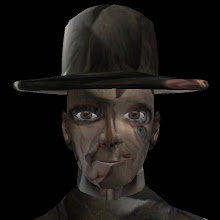
I did 6 x half-hour OpenSim inductions last Wednesday, introducing about 100 of our first year Graphics Students to a virtual world. They all seemed pretty happy about the experience, and some of them manage to build some pretty cool stuff. One of them even managed to terraform the island into a face (above). Not bad for a complete Noob.

I left them with a quick start guide to Second Life, and several have manage to log in since and send me an instant message.
The second pilot proper starts next Monday, and I've ended up deciding to run it as one of five projects that occupy the first three weeks of the second module. Students have an option of continue with the project after this three week block, running alongside the next lot of projects. About 10 people have signed up so far, so we should have enough to create two teams. The project is based on 'The Manual', which is a book of mini-projects, quotes and ideas relating to Graphic Arts & Design, written by all 17 staff that teach on the graphics course. Along with Graham and other project team members, I've adapted the tasks to suit Second Life and collaboration, and I plan to display these mini-projects in the middle of LeedsMet island. Each team gets a big plot to build on, and Kisa & Cubist will be providing support for the development of the work over the 3 week slot. We also have a Big Draw event going on in the middle week, so we plan to link in with this as well. Here is the timetable of initial events:
Monday 20th October - Module GAD1.2 and project launch - Second Life session in H701 or remotely.
Tuesday 21st October - In-world session on Leeds Met island. Activities.
Wednesday 22nd October - Second Life session in H701 at 10am.
Friday 24th October - Activities on LeedsMet island
Monday 27th October - Live Second Life Big Draw session in Library and on Leeds Met island.
Tuesday 28th October - Live Second Life Big Draw session in Library and on Leeds Met island.
Wednesday 29th October - Live Second Life Big Draw session in Library and on Leeds Met island.
Thursday 30th October - Live Second Life Big Draw session in Library and on Leeds Met island.
Friday 31st October - Live Second Life Big Draw session in Library and on Leeds Met island.
Tuesday 4th November - Exhibition and feedback on LeedsMet island.
Friday 7th November - Exhibition and feedback on LeedsMet island. Party.

Thursday, 25 September 2008

Oil spill

Twitter is the oil that has lubricated my ideas today.
A JISC-Emerge tweet alerted me to a blog post by Josie Frazer about Dave White's work on Residents and Visitors for the JISC funded Isthmus project. Dave is, of course, Open Habitat's project manager, which is quite handy.

My fuzzy thinking about all of this at the moment needn't prevent me from spilling a few ideas here.

It strikes me that the idea of 'Residents' might be the key to unlocking the problem of collaboration in the Art & Design pilot. We have just decided to split participants in the second pilot into teams, and to give each team a home. We are trying to make them into residents in a virtual world, rather than just visitors. The difference, I think, is that Isthmus is looking at web based communities and is dealing with a more abstract sense of residents and visitors. We are thinking much more literally about our students building a home (albeit a fairly abstracted one) and becoming residents in it. The collaboration aspect will come from the fact that we are forcing our students to share a house (which is, after all, what being a student is all about).

I've not quite got this one clear yet. I may well be missing some points. I'll try and pin things down a bit better tomorrow.

From Habitat to G-Plan

Intrigued by a PhD student that I am advising, inspired by a conversation with Graham yesterday, and supported by this article I've just stumbled upon, I think we have the plan sorted.

Reality Check.
The reality of meeting all 127 first year students on Monday, and discussing the schedule of projects, activities and assessments with the Level One staff has really focussed my thinking. The original strap line for Open Habitat was "Real learning in virtual worlds." Some real learning happened in the phase one pilot, but if we want to integrate the second pilot into our student's programme of study, much more real learning needs to take place. The harsh reality is that unless the work produced in a virtual world counts towards assessment, and is seen to be directly relevant to the other activities that are going on in the first year, we won't get any real learning, as nobody will turn up. With this in mind, I have abandoned my immersionist dream of totally disconnecting the avatars from their students, and instead have decided to take a more integrated approach. I am in the process of writing a virtual worlds element into both the induction and main module that will be running at the same time as the pilot in level 1. Students will be given an option to work in the virtual world, either bringing in the real world project activities to explore, or to work on specific tasks and negotiated activities. All of the work will be assessable.

Collaboration.
The other slightly vague area in all of our previous pilot plans was collaboration. I think Graham has cracked this one. One of the things that many noobs want to do is create a place to call home. I suggested that we enable collaboration through peer support by splitting the participants up into teams, and Graham suggested that each team should first be directed to build a home for the team. This home would force collaboration, as team members would need to discuss the implementation of their home building. I see each home becoming the focus for subsequent activities, acting as a shared studio, meeting place, exhibition space and crit area. The idea of collaboration through a team can also be the basis of other activities, such as more competitive quests (the Spartosophy idea that I still have under wraps).

Anyway, the initial plan of the 1 day OpenSim induction on the 8th October, with a period of exploration guided by 'Kisa's 50 micro-quests for Noobs', will now be followed by team and plot allocation at the first in-world meeting on the 17th Oct, and an initial home building quest. Further details to follow.

Tuesday, 23 September 2008

Back to plan, er, E, F?

For a variety of reasons, the Faculty wide idea is no longer on the cards, so I'm reverting back to the A&D students for the second pilot.
The ruthless culling of seemingly fully-formed plans is an essential part of the creative process, but my apologies to those readers not used to this turbulent approach to project planning.

Sunday, 21 September 2008

Pruning my previous ideas, and planting a big new one.


I recently helped the Police get their Freshers' safety message across by installing a poster on one of our islands:
The V.C. mentions it here in his daily reflection,
and here's a report in the Yorkshire Evening Post

On Tuesday, the Faculty is hosting a special Freshers' welcome day, where the Police will be promoting their Safety message and, hopefully, pointing Second Life savvy first years to our island. It has suddenly stuck me that this might provide an ideal opportunity to recruit the sort of experienced avatars to our study that we need. One of the findings from the evaluation of the first pilot was the limitations associated with getting noobs up to speed before we could tackle some of the more focussed activities around collaboration. I'm estimating that there will be around a thousand freshers at the event on Tuesday, so there is a good chance that there will be several SL experts in the audience. The faculty runs a broad range of programmes, including art & design, building & construction, cultural studies, social sciences, film and television, architecture and tourism. If we could bring together students from across these disciplines, we would stand a much better chance of getting some meaningful collaboration going.
One issue might be the potential conflict between the students' involvement with a weird virtual worlds project, and their chosen programme of study. I can imagine some of my colleagues in other parts of the Faculty perhaps taking exception to me interfering with their students learning. One solution to this that I've thought of is to support the University's strong commitment to volunteering. If the focus of collaboration between Faculty students in Second Life had a worthy aim, then not only would we sit comfortably outside the constraints of curriculum, but we could do something good for the world. There are several charity events exist already in Second Life. Relay for Life is in July, so this doesn't fit into out timeframe for the project. We're cutting it a bit fine for Burning Life, which starts on 27th September, but this event could provide a timely focus for socialisation activities, and to get the idea across about what we might do.

The other idea I had was to gather together the SL expert freshers next week and make them Leeds Met mentors, and than draft them in to assist with the previous plan that I blogged about recently. This would be a good way to test out the mentoring opportunity identified in the evaluation of the first pilot.

I think that if we could bring together a much bigger group of students on the fertile ground of Leeds Met's islands, then the sort of rhizomatic swellings of collaboration that Dave C talks about might just happen. If Kisa and I can act as gardeners, then we might just get something special growing out of this project.